
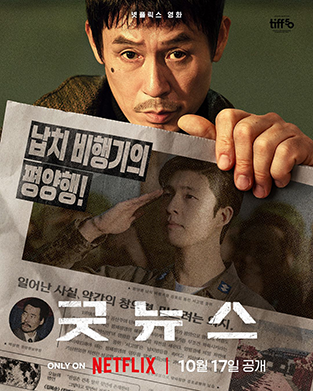
Good News: The Ultimate Filming Location Guide (2025)
If there’s one thing Director Byun Sung-hyun knows how to do, it’s making deception look absolutely stylish. From the mind behind The Merciless and The Kingmaker, his latest Netflix masterpiece “Good News” (굿뉴스) takes us back to 1970 for a high-stakes hijacking thriller that has everyone talking. But the real star of the show isn’t just the intense performance by Sul Kyung-gu (playing the shadowy fixer “Nobody”); it’s the incredible, atmosphere-drenched locations that bring this Cold War-era spy ruse to life.
Set against the backdrop of a divided nation, the film revolves around a truly audacious plan: if a hijacked plane can’t be stopped, why not just build a fake Pyongyang airport to trick the hijackers into landing? To pull this off, the production traveled across South Korea, finding hidden bunkers, vintage barbershops, and sprawling military airfields.
Pack your bags and sharpen your surveillance skills—we’re touring the gritty, gorgeous, and sometimes top-secret world of Good News.
Original Title: 굿뉴스 (Good News)
Cast: Sul Kyung-gu, Hong Kyung, Ryoo Seung-bum, Takayuki Yamada, Kippei Shiina
Director: Byun Sung-hyun
Runtime: 136 minutes Release
Year: 2025
Platform: Netflix Original
Awards: World premiere in the Special Presentations section of the 2025 Toronto International Film Festival
The Journey: Episode-by-Episode Locations
1. Bucheon Art Bunker B39 (부천아트벙커B39)
- Scene: The operational command center where KCIA Director Park Sang-hyeon (Ryoo Seung-bum) and “Nobody” map out the “Fake Pyongyang” logistics.
- Address: 314 Seokcheon-ro, Bucheon-si, Gyeonggi-do
Walking into the B39 Art Bunker feels like walking into the ribcage of a concrete giant. Once a municipal incinerator, this brutalist marvel was repurposed as an art space, but in Good News, it returns to its industrial roots. The sheer 39-meter-high walls create a sense of overwhelming weight, perfectly mirroring the crushing pressure the characters face as they plan their treasonous deception.
If you visit, you can literally feel the “crushing” atmosphere Dir. Byun was going for. The concrete bunkers naturally swallow sound, which is why the characters speak in those intense, strained whispers that give you chills. Pro tip: Check their schedule for contemporary art exhibits—the juxtaposition of modern art in a space that feels like a 1970s war room is a vibe only Korea can offer.
2. Hwarim Barbershop (화림이발관)
- Scene: Lieutenant Seo Go-myung (Hong Kyung) tracks down the fixer “Nobody” in a quiet neighborhood barbershop.
- Address: 12 Sinpo-ro 27beon-gil, Jung-gu, Incheon
Tension has never looked so… domestic. The scene where “Nobody” is found getting a straight-razor shave while discussing high-stakes espionage is a masterclass in suspense. The rhythmic scraping of the blade against the background of steam and porcelain tile makes every whispered word feel dangerous.
The best part? This isn’t a set. The location team found this perfectly preserved time capsule in Incheon’s historic district. The ceramic tiles and leather chairs are authentic to the late 1960s, needing zero set dressing to look the part. It’s located in the Sinpo-ro area, which is famous for its retro charm. Stop by for a look, but maybe skip the straight-razor shave if you’re prone to jitters!
3. Unbo’s House (운보의 집)
- Scene: A lavish elite gathering where Park Sang-hyeon blackmails a minister to divert anti-aircraft battalions.
- Address: 92-41 Hyeongdong 2-gil, Naesu-eup, Cheongwon-gu, Cheongju-si, Chungcheongbuk-do
In a film full of shadows and concrete, Unbo’s House is a breath of elegant, albeit corrupt, air. This sprawling traditional Hanok estate represents the detached luxury of the 1970s political elite. The production used the pavilion floating over the koi pond to isolate the threatening conversation from the party noise—a visual reminder that even in paradise, the KCIA is always watching.
This was the real-life residence of the legendary Korean painter Kim Ki-chang. The gardens are meticulously manicured, and the architecture is some of the finest in the region. Note: Reservation is highly recommended for visits, as it is a preserved cultural site and often hosts private events or guided tours.
4. Hanseo University Taean Campus (한서대학교 태안캠퍼스)
- Scene: Lieutenant Seo Go-myung oversees the agonizingly precise flight simulations for the Pyongyang descent.
- Address: 46 Gomseom-ro, Nam-myeon, Taean-gun, Chungcheongnam-do
Technical legitimacy was key for Dir. Byun, and he found it at Hanseo University. The scenes involving pilot training and technical maneuvers were filmed using the university’s actual aviation facilities and flight simulators. The visceral, shaking camera work inside the cockpit makes you feel the physical strain of trying to land a plane that’s being lied to.
While the aviation department is an active training facility, the campus itself offers a unique look at Korea’s modern infrastructure. For fans of technical realism in K-Cinema, seeing where the actual flight mechanics were mapped out adds a whole new layer to the movie’s climax.
5. Gimpo International Airport (김포국제공항)
- Scene: The civilian flight departs while “Nobody” watches from the terminal, starting the countdown to the ruse.
- Address: 112 Haneul-gil, Gangseo-gu, Seoul
To capture the 1970s airport vibe, the production took over a disused wing of Gimpo Airport and went full retro. We’re talking analog flip-board signs, vintage KAL liveries, and those classic mid-century luggage carousels. It anchors the wild spy plot in a frighteningly “normal” reality before the chaos begins.
Gimpo is much easier to transit through than Incheon for domestic trips, and you can still catch echoes of that older architectural style in parts of the domestic terminal. It’s the perfect place to start your own Good News filming location pilgrimage.
6. Gunsan Modern History District (군산 근대역사거리)
- Scene: The frantic, high-speed convoy hauling North Korean propaganda signs through city streets.
- Address: 240 Haean-ro, Gunsan-si, Jeollabuk-do
Gunsan is a director’s dream. Because of its exceptionally well-preserved colonial-era and mid-century architecture, the convoy sequence could be filmed with minimal CGI. Seeing giant portraits of Kim Il-sung being hauled through mid-century Korean storefronts creates a surreal, darkly comedic tension that defines the film’s second act.
This district is a “must-visit” regardless of the movie. It’s like walking through a living museum. You can wander the same streets “Nobody” drove through, checking out the Japanese-style houses and old port buildings that make Gunsan one of Korea’s most photogenic cities.
7. Gunsan Airport (군산공항)
- Scene: The grand climax. The hijacked plane lands at the “Fake Pyongyang” set in the dead of night.
- Address: 2 Seonyeon-ri, Okseo-myeon, Gunsan-si, Jeollabuk-do
The crown jewel of the production. The art department built 40-foot temporary facades right on a secured section of the real Gunsan Airport to create the North Korean military airfield. The red banners, the propaganda murals, and the rows of soldiers were so convincing that it remains the most talked-about set piece of the year.
Since Gunsan Airport is a dual-use facility (civilian and military, sharing runways with the US Air Force), security is tight! While you can’t walk onto the actual runway where the fake set stood, flying into or out of Gunsan gives you a bird’s-eye view of the expansive, wind-swept landscape that hosted the film’s heart-stopping finale.
8. Imjingak (임진각)
- Scene: The quiet aftermath. Park and “Nobody” stand at the border, looking toward the real North Korea.
- Address: 148-53 Imjingak-ro, Munsan-eup, Paju-si, Gyeonggi-do
The film ends not with a bang, but with a melancholic fog. Filmed at the Imjingak Peace Park, the final scene uses the rusted train tracks and the DMZ landscape to strip away the thrill of the espionage, leaving a haunting reminder of the division that made the “Fake Pyongyang” ruse possible in the first place.
Interestingly, the fog in the movie wasn’t planned—a sudden, dense morning mist rolled over the river, and the director decided to shoot it practically. It’s the most atmospheric spot on this list. Visit during the early morning for that same somber, reflective experience.
Travel Tips for Fans
- Map Apps: Forget Google Maps! It doesn’t work well for walking or bus routes in Korea. Download Kakao Map or Naver Map for pinpoint accuracy to these addresses.
- Getting Around: Pick up a T-money card at any convenience store. It works on all subways and buses across all regions mentioned in this guide.
- Best Time to Visit: To catch the moody atmosphere of the film, Autumn (October-November) is ideal. The crisp air and morning mists at places like Imjingak or Gunsan perfectly recreate the movie’s aesthetic.
- Logistics: Many of these locations (Gunsan, Cheongju, Taean) are best reached via Express Bus or Train (KTX/SRT) followed by a short taxi ride.