
Oldboy: The Ultimate Filming Location Guide (2026)
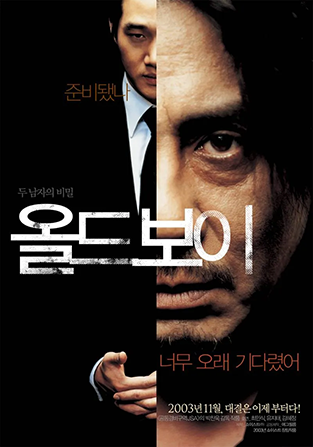
In the annals of Korean cinema, few films are as visceral or as haunting as Park Chan-wook’s Oldboy. It is a film of dark corridors, rainy streets, and the cold, lingering taste of fried dumplings—a neon-noir odyssey that transformed South Korea’s urban landscapes into a labyrinth of trauma and revenge. Released in 2003, it won the Grand Prix at Cannes and introduced the world to the “One-Take” hammer fight, a scene that has been studied by film students and action junkies alike for over two decades.
The story follows Oh Dae-su, a man kidnapped and imprisoned in a private cell for 15 years without explanation. Upon his sudden release, he is given five days to uncover the identity and motive of his captor. To walk the path of Oh Dae-su today is to venture into the shadow-drenched corners of Seoul, the vibrant streets of Busan, and even the snowy peaks of New Zealand. Grab your hammer and your T-money card—we’re going on a journey through the heart of a masterpiece.
Original Title: 올드보이 (Oldboy)
Cast: Choi Min-sik, Yoo Ji-tae, Kang Hye-jung, Ji Dae-han
Director: Park Chan-wook
Studio: Show East / Egg Films
Runtime: 120 minutes Release
Year: 2003
Awards: Grand Prix (Jury Prize) at the 2004 Cannes Film Festival; part of Park Chan-wook’s Vengeance Trilogy
The Journey: Episode-by-Episode Locations
1. Seodaemun Police Station (서대문경찰서 삼창빌딩)
- Scene: In the opening sequence, a drunken Oh Dae-su is released from the police station into the custody of his friend. He stops at a nearby phone booth to call his daughter for her birthday before mysteriously vanishing into thin air.
- Address: Samchang Building, 13 Chungjeong-ro, Seodaemun-gu, Seoul, South Korea
This is the “Ground Zero” of the film’s 15-year mystery. While the police station in the film was a temporary office inside the Samchang Building, the area still hums with that classic, gritty Seoul urban energy. The iconic phone booth was a prop, but standing on this corner, you can almost feel the rain and the disorientation of that fateful night in 1988.
The building is located right in front of Exit 8 of Chungjeongno Station. It’s a busy intersection, perfect for soakng up the atmosphere of the city that eventually forgot Oh Dae-su for fifteen long years. If you’re visiting, take a moment to look at the surrounding architecture—it perfectly captures the blend of old and new Seoul that Park Chan-wook loves to frame.
2. Gwangnaru Han River Park (광나루 한강공원)
- Scene: Immediately after his sudden release from a suitcase (an iconic, surreal moment), Dae-su is seen wandering through a wide, overgrown field, clutching the money and cell phone he was given by his captors.
- Address: 139-2 Cheonho-dong, Gangdong-gu, Seoul
The transition from 15 years of wallpapered confinement to the vast, open fields of Gwangnaru is one of the most jarring shifts in the movie. Today, this park is a beloved spot for cycling and picnics, but if you head toward the reed fields near the river, you can still find that sense of isolation.
The park offers a stunning view of Gwangjin Bridge. It’s the perfect place to start your pilgrimage, as it represents Dae-su’s rebirth into a world he no longer understands. The contrast between the natural greenery and the distant city skyscrapers serves as a visual metaphor for his “out-of-time” status.
3. Jang Seong Hyang (장성향)
- Scene: Driven by a singular taste memory, Dae-su travels to Busan and wanders through Chinatown, eating fried dumplings at every Chinese restaurant to identify the specific flavor of the “Blue Dragon” brand from his cell.
- Address: 29 Daeyeong-ro 243beon-gil, Dong-gu, Busan
This is arguably the most famous culinary location in Korean cinema. For fifteen years, Dae-su ate these dumplings every single day. While the movie uses the fictional name “Blue Dragon,” the real restaurant is Jang Seong Hyang, located right in the heart of Busan’s Chinatown (Sanghae-geori).
The restaurant leans into its fame, serving “Oldboy Mandu”—oversized, crispy, and incredibly filling dumplings. They are much larger than your average gyoza, with a thick, satisfying crust. The interior still carries that vintage, slightly dim vibe seen in the film. It’s an absolute must-visit, but come hungry—those dumplings are no joke!
4. Jung-u-dang Watch Shop (정우당)
- Scene: Dae-su and Mi-do visit this cluttered, old-fashioned watch shop while searching for clues about the purple gift box and his missing family history.
- Address: 161 Ssangnim-dong, Jung-gu, Seoul
Tucked away in the Jung-gu district, this shop is a treasure trove of nostalgia. In the film, it represents the search for roots and the agonizing passage of time. The shop has transitioned from a watch shop to a gold shop, but it retains that cramped, atmospheric “time capsule” feel that worked so well for the scene.
Visiting here feels like stepping back into the early 2000s. It’s not a major tourist hub, which makes it feel all the more authentic for a dedicated fan. It’s a quiet reminder that while the city evolves, some corners of Dae-su’s world remain frozen in place.
5. Yongsan Electron Land (전자랜드)
- Scene: Dae-su and Mi-do navigate the endless, maze-like aisles of electronics to find equipment to sweep for bugs and trace phone calls as they tighten the net on his captor.
- Address: 74 Cheongpa-ro, Yongsan-gu, Seoul
Yongsan Electronics Market was once the beating heart of Korea’s tech scene, and Electron Land is its most iconic building. In the movie, it highlights Dae-su’s struggle to navigate a technologically advanced society. Walking through the rows of processors and vintage gadgets, you can easily picture the frantic energy of his investigation.
Even though it’s been modernized, the industrial, labyrinthine layout remains. It’s a great place to see the intersection of Korean daily life and the high-tech image the country is known for. It’s just a 10-minute walk from Yongsan Station, making it an easy add to any Seoul itinerary.
6. Gyeongnam Nursing High School (경남간호고등학교)
- Scene: In a series of haunting, dreamlike flashbacks, a young Oh Dae-su witnesses the secret of Lee Woo-jin and his sister, Lee Soo-ah, in the school’s laboratory.
- Address: 105-18 Gye-ri, Saengbiryang-myeon, Sancheong-gun, Gyeongsangnam-do
Known as “Evergreen High School” in the film, this location is the source of the rumor that fueled decades of revenge. Located in rural Sancheong-gun, the school provides a sharp, beautiful contrast to the gritty urban scenes of Seoul. The quiet, idyllic campus hides the dark “root” of the entire tragedy.
Please keep in mind that this is an active school, so visiting hours are strictly during non-class times and you should be respectful of the students and staff. The drive out to Sancheong is scenic and gives you a chance to see the Korean countryside, which is a significant part of the film’s second-half identity.
7. Hapcheon Dam Bridge (합천댐)
- Scene: The emotional climax of the villain’s backstory; the heartbreaking flashback where Lee Soo-ah lets go of Lee Woo-jin’s hand and falls into the water.
- Address: 2108 Hapcheonhoban-ro, Daebyeong-myeon, Hapcheon-gun, Gyeongsangnam-do
The beauty of the reservoir makes this one of the most visually stunning yet devastating locations in the film. The bridge over the dam is where the world effectively stopped for Lee Woo-jin. It is a place of absolute stillness and profound tragedy.
The area is actually quite popular for its scenic driving routes and the nearby Hapcheon Movie Park. However, standing on the bridge looking out over the water, it’s impossible not to think of that final, desperate grip and the “rumor” that led to a 15-year imprisonment.
8. Mt. Lyford Alpine Resort, New Zealand
- Scene: The ending. After the final confrontation, a hypnotized Oh Dae-su and Mi-do embrace in a vast, pristine field of snow, seeking peace in a landscape that feels outside of time.
- Address: Mount Lyford Ave, Lyford 7373, New Zealand
Director Park Chan-wook chose this location because he wanted a landscape so pure and white that it could represent the “infinite” nature of the film’s conclusion. It’s a world away from the crowded alleys of Seoul, offering a sense of ambiguous redemption or final forgetting.
If you happen to be in New Zealand during the ski season (June–September), Mt. Lyford is a beautiful, family-run resort. It’s the perfect, quiet bookend to an Oldboy tour, representing the cold, quiet peace that follows a lifetime of fire and vengeance.
Travel Tips for Fans
- Navigation: Forget Google Maps! In Korea, Kakao Map and Naver Map are your best friends. They are much more accurate for subway exits and bus timings.
- Transit: Get a T-money Card immediately at the airport or any convenience store. It works for subways and buses across the entire country (including Busan).
- Timing: The best time to visit is Spring (April/May) for cherry blossoms or Autumn (October/November) for stunning fall foliage. If you want that Oldboy ending vibe, New Zealand’s ski season is June through September.
- The “Mandu” Experience: At Jang Seong Hyang, the dumplings are huge. One order (usually 8-10 pieces) is enough for two people. Don’t say I didn’t warn you!