
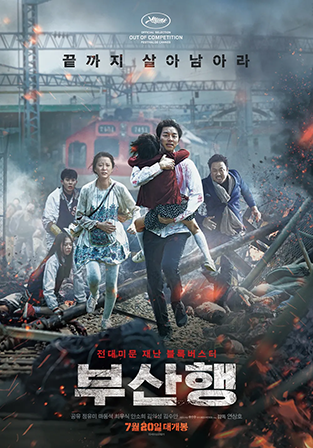
Train to Busan: The Ultimate Filming Location Guide (2016)
If there is one movie that forever changed the way we look at a simple train commute, it’s Yeon Sang-ho’s 2016 cinematic masterpiece, Train to Busan (부산행). Credited with single-handedly revitalizing the Asian zombie genre and turning South Korea’s high-speed rail network into a claustrophobic nightmare, the film seamlessly blends heart-pounding action with profound emotional stakes.
The story follows Seok-woo (Gong Yoo) and his young daughter Su-an (Kim Su-an) as they board a KTX from Seoul to Busan, only to find themselves trapped in the middle of a fast-spreading viral outbreak. Alongside a memorable cast of characters—including the heavy-hitting, fan-favorite Sang-hwa (Ma Dong-seok)—they must fight their way through hordes of the infected.
As a travel and K-Drama/Movie location hunter, I couldn’t resist tracing this iconic, terrifying route. While the movie’s tightly confined train interiors were largely shot on meticulously crafted soundstages, the soul of the film lives in the real, echoing halls of South Korea’s busiest transit hubs. This guide will take you through the very stations and cities that framed the apocalypse, spanning Seoul, Chungcheong, Daejeon, Gwangju, Daegu, and Busan. Grab your ticket, mind the gap, and let’s ride!
Original Title: 부산행 (Train to Busan)
Cast: Gong Yoo, Jung Yu-mi, Ma Dong-seok, Kim Su-an, Choi Woo-shik, Ahn So-hee
Director: Yeon Sang-ho
Studio: Next Entertainment World (NEW) / RedPeter Film
Runtime: 118 minutes Release
Year: 2016
Awards: Cannes Film Festival — Midnight Screenings selection (2016); over 11 million admissions in South Korea
The Journey: Episode-by-Episode Locations
1. Seoul Square (서울스퀘어)
- Scene: Seok-woo’s office building where he works as a fund manager before heading to the train station.
- Address: 416 Hangang-daero, Jung-gu, Seoul
Before the blood, sweat, and tears, there was just the cold, sterile life of corporate Seoul. Seoul Square serves as the establishing shot for Seok-woo’s life before the outbreak forces him to re-evaluate what truly matters. As a workaholic fund manager, his connection to his humanity—and his daughter—is frayed, beautifully mirrored by this imposing, ultra-modern skyscraper.
Standing right across from Seoul Station, this iconic building is hard to miss. Its massive LED facade is a famous landmark in the city, often lighting up the night sky with digital art. It’s also a heavy hitter in the K-Drama world, famously serving as the primary location for the hit series Misaeng.
When you visit, take a moment to stand in the plaza and look up at the sheer scale of the building. It perfectly sets the tone for the journey ahead: a stark transition from the hyper-organized, capitalist center of Seoul to the complete breakdown of social order just hours later.
2. Seoul Station (서울역)
- Scene: The very beginning of the journey. Seok-woo and Su-an arrive at the station as the first whispers of chaos begin in the underground paths.
- Address: 405 Hangang-daero, Yongsan-gu, Seoul
This is ground zero. Seoul Station is the bustling heart of South Korea’s rail network, and in the film, it serves as the launching pad for the terrifying ordeal. The contrast between the mundane, sleepy morning commute and the sudden, violent outbreak perfectly establishes the film’s frantic, breathless pace.
The production team cleverly used the real Seoul Station plaza for wide shots to capture the grand scale of the panic. If you’ve ever been to Seoul Station during rush hour, you know it already feels like a battle for survival! To pull off the apocalyptic emptiness seen in parts of the film, crews had to shoot during the wee hours of the morning to manage the massive crowds.
Today, walking through the station with a coffee in hand, it’s thrilling to picture Gong Yoo rushing through these very concourses. Head toward the KTX boarding gates and you’ll easily recognize the sprawling architecture that framed the film’s opening moments.
3. Sapgyo Station (삽교역)
- Scene: Early scenes where the train passes through the rural countryside, showcasing the train’s non-stop flight from the infected zones.
- Address: 111 Sapgyeok-ro, Sapgyo-eup, Yesan-gun, Chungcheongnam-do
As the KTX speeds away from the unfolding disaster in Seoul, the passengers begin to realize the horrifying truth: the infection isn’t isolated. It’s spreading across the provinces. Sapgyo Station makes its appearance as a visual marker of the train tearing through the Korean countryside, emphasizing the isolation of the survivors trapped inside the metal tube.
In reality, Sapgyo Station is a quiet, modern stop on the Janghang Line. The production team specifically chose this location for its clean, contemporary look and the fact that it allowed them to film exterior train movement without disrupting the heavy traffic of the main KTX lines.
It’s a peaceful spot in Chungcheongnam-do today, standing in stark contrast to the terror it represented on screen. It’s worth a visit if you’re exploring the Yesan area and want to see how movie magic turns a tranquil rural station into a backdrop for a high-speed thriller.
4. Cheonan-Asan Station (천안아산역)
- Scene: The train speeds through this station without stopping, revealing empty platforms and the first ominous signs of military mobilization.
- Address: 100 Huimang-ro, Baebang-eup, Asan-si, Chungcheongnam-do
Cheonan-Asan Station marks the psychological “point of no return” for the passengers. As Su-an and Seok-woo peer out the windows, the terrifying blur of empty platforms and panicked military movements confirms that there is no safe haven nearby.
Behind the scenes, the filmmakers utilized cutting-edge “LED volume” technology to bring these sequences to life. Rather than shooting everything practically at high speeds, they played pre-recorded footage of Cheonan-Asan Station on massive screens outside the train set’s windows, giving the actors a realistic environment to react to.
For fans doing a rail tour, Cheonan-Asan is a fantastic architectural space. Its massive glass ceilings and sprawling platforms make it easy to envision the frantic military scrambling portrayed in the movie.
5. Daejeon Station (대전역)
- Scene: The infamous “Daejeon Massacre.” The passengers disembark thinking it’s a safe military zone, only to be ambushed by infected soldiers.
- Address: 215 Jungang-ro, Dong-gu, Daejeon
If you mention Train to Busan to anyone, the “Daejeon Massacre” is likely the first scene that comes to mind. The survivors step off the train into the eerie silence of Daejeon Station, hoping for military rescue, only to be met by a terrifying horde of zombified soldiers. This is where the group is violently split, and where Sang-hwa (Ma Dong-seok) first fully flexes his incredible, zombie-smashing strength.
The legendary sequence where the infected tumble over the escalator glass in a writhing mass was achieved with practical stunts, wirework, and sheer cinematic brilliance. Today, fans often visit the Daejeon Station escalators to snap “survival” selfies, keeping an eye over their shoulders just in case.
While you’re here, grab some famous fried streusel bread from Sungsimdang Bakery inside the station. It’s the ultimate comfort food after reliving one of the most stressful scenes in Korean cinema history!
6. Gwangju-Songjeong Station (광주송정역)
- Scene: Platform-level chases and the frantic struggle to re-board the train during the Daejeon stop.
- Address: 201 Sangmu-daero, Gwangsan-gu, Gwangju
Movie magic alert! While the narrative places the horrifying platform chase in Daejeon, several of the wide, sprawling shots were actually filmed further south at Gwangju-Songjeong Station. Here, characters like Young-gook (Choi Woo-shik) and Jin-hee (Ahn So-hee) fight tooth and nail alongside the main survivors to get back onto the moving train.
Gwangju-Songjeong was selected because its modern layout and expansive platforms provided the necessary scale to safely film the long-distance sprinting and intense stunt choreography that made the tension so palpable.
When you stand on these platforms today, you can truly appreciate the distance the actors had to cover while dodging stuntmen. It’s a bustling hub for the Honam KTX line, so while you won’t be outrunning zombies, you might still find yourself doing a light jog to catch your train!
7. Dongdaegu Station (동대구역)
- Scene: The massive train derailment blocks the tracks, forcing the survivors to abandon their KTX and find a new locomotive to push onward to Busan.
- Address: 550 Dongbu-ro, Dong-gu, Daegu
This location hosts the emotional and physical climax of the film’s second act. Arriving at Dongdaegu Station, the survivors find the tracks completely blocked by flaming wreckage and derailed trains. They are forced out into the open, navigating the treacherous rail yard to find a working locomotive.
Filming on the actual tracks at Dongdaegu involved an unprecedented level of coordination with KORAIL to ensure no real trains were operating on the lines during the massive stunt sequences. The sprawling industrial vibe of the Daegu tracks added a gritty, apocalyptic realism to the tragic loss of key characters that happens in this sequence.
Dongdaegu Station is one of the largest and busiest stations in the country. Standing near the tracks, it’s easy to feel dwarfed by the massive trains—a reminder of the terrifying mechanical labyrinth Seok-woo and his group had to navigate.
8. Simcheon Tunnel (심천터널)
- Scene: The heartbreaking final scene where Su-an and Seong-kyeong walk through a dark tunnel toward the military barricade.
- Address: Cheongseong-myeon, Okcheon-gun, Chungcheongbuk-do
Before reaching the final destination, we must pass through the darkness. The Simcheon Tunnel is the setting for the ultimate moment of survival and grief. Covered in ash and soot, Su-an and Seong-kyeong walk into the pitch-black tunnel toward an unseen Busan military barricade. Su-an singing “Aloha ‘Oe”—the song she prepared for her father—echoes through the dark, proving their humanity to the snipers and preventing them from firing.
Located in rural Yeongdong-gun, this actual rail tunnel has become a legendary pilgrimage spot for hardcore fans. It perfectly symbolizes the literal and metaphorical light at the end of the tunnel for the survivors.
If you venture out to Chungcheongbuk-do to see this site, be prepared for a hauntingly quiet atmosphere. The chilling beauty of the surrounding countryside makes it an incredibly poignant place to end your location hunt.
9. Busan Station (부산역)
- Scene: The destination of the entire journey, representing the ultimate hope for a safe haven.
- Address: 206 Jungang-daero, Dong-gu, Busan
This is the end of the line. Busan Station is the driving force behind every single action, sacrifice, and desperate sprint in the film. While the emotional climax takes place in the rail yards and tunnels, the station itself stands as the symbolic safe zone the entire country was desperate to reach.
The sweeping exterior of Busan Station is a triumph of modern architecture and the perfect backdrop for fans finishing their Train to Busan journey. After surviving your own KTX ride down the peninsula, stepping out into the Busan Station plaza feels like a victory.
Take a deep breath of the ocean air, snap a photo in front of the sweeping glass facade, and celebrate the fact that the only things waiting to swarm you in Busan are incredible seafood stalls and beautiful beaches.
Travel Tips for Fans
- Transportation Cards are a Must: To ride the subway networks across Seoul, Daejeon, Daegu, Gwangju, and Busan seamlessly, grab a T-money card at any convenience store. For the KTX itself, book tickets in advance via the official KORAIL app or website.
- Best Seasons to Visit: Spring (April-May) and Autumn (September-November) are the best times to do this cross-country tour. The weather is perfect for walking around massive station plazas and rural tunnels without suffering through the sweltering, zombie-like sweat of the Korean summer.
- Navigation Apps: Do not rely solely on Google Maps in South Korea, as walking directions are often limited due to local security laws. Download KakaoMap or Naver Map for accurate transit routes, train times, and precise walking paths to these cinematic landmarks.